

On July 4, the United States of America will celebrate 250 years since the start of what George Washington called “the great American experiment.” A longstanding era of freedom and democracy in North America that is being celebrated for its continuance.
But on July 1, in a farming community inside this 250-year-old country, it was the end of an era that was being celebrated.
The end of Utah State University’s tenure as a member of the Mountain West Conference officially ended as the clocks struck midnight on June 30, 2026.
Enter the Pac-12 era of Utah State Aggies Athletics.
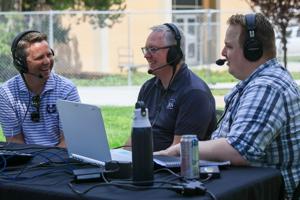
This journey began in late 2024 when Utah State, led by a different president and athletics director, announced it would depart the Mountain West and join Boise State, Colorado State, Fresno State and San Diego State in rebuilding a shattered Pac-12. But even for those like the current athletics director, Cam Walker, who has only experienced a few months of this hype, the anticipation has been real. In an interview with KVNU and 106.9 The FAN, Walker said the feeling of finally being past the July 1 deadline was “incredible.”
“The excitement and the opportunity we have to build here is just all before us and really exciting,” Walker said. “We’ll be able to accomplish just so many things.”
Walker likened the moment to the 5k Utah State hosted on June 30 as part of its Pac-12 celebration.
“That race was kind of symbolic. Like, it feels like, alright, it’s time to go,” Walker said. “And now it’s ‘How fast can we go, and how long can we sustain it?’ And my hope is for really fast and for a really long time.”
Utah State President Brad Mortensen has sat in virtually the same boat as Walker, having been hired as the university president only eight months ago. But he’s been boots on the ground with rebuilding the Pac-12 from a two-team league back to a fully functioning conference.
“(The) Pac-12 went down to just a real skeleton operation there in this in-between time, and then they’ve been ramping up,” Mortensen said. “And so we’ve had to do everything to recreate the bylaws, recreate the logo, talk about how we’re going to schedule. All those things were just fresh and new, and so the ADs and the Pac-12 conference staff, Teresa Gould and her team, worked really hard.”
For Utah State’s coaches, there is a mix between those who coached a long time in the Mountain West and those who are jumping on the train right as it arrived at the Pac-12 station.
Manny Martins is one of the former. The soccer program that he built into a machine in Cache Valley cut its teeth in the Mountain West and has raised the conference tournament trophy in each of the last three seasons. Memories of trials and successes from the MW era leap easily to the mind.
“Our first win down south in my first year at BYU,” Martins recalled as his favorite memory while in the Mountain West. “Reason being because it shifted accelerated everything for us from the belief our team had uh the growth of that team and our ability to recruit.
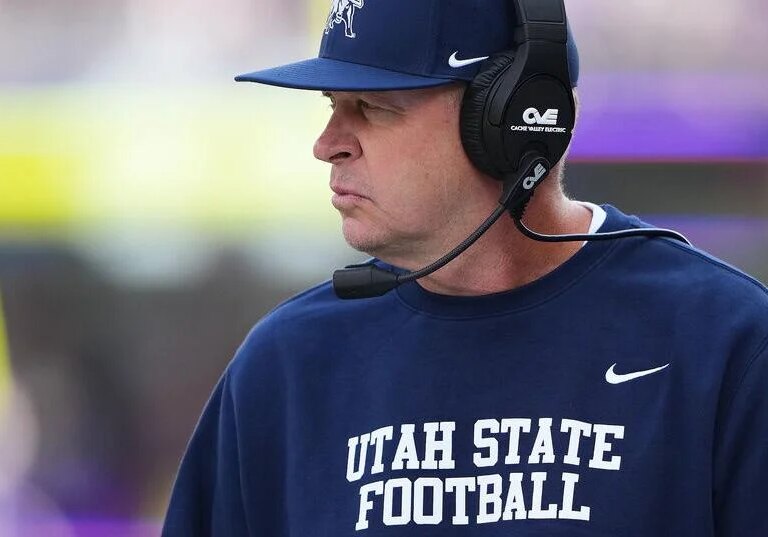
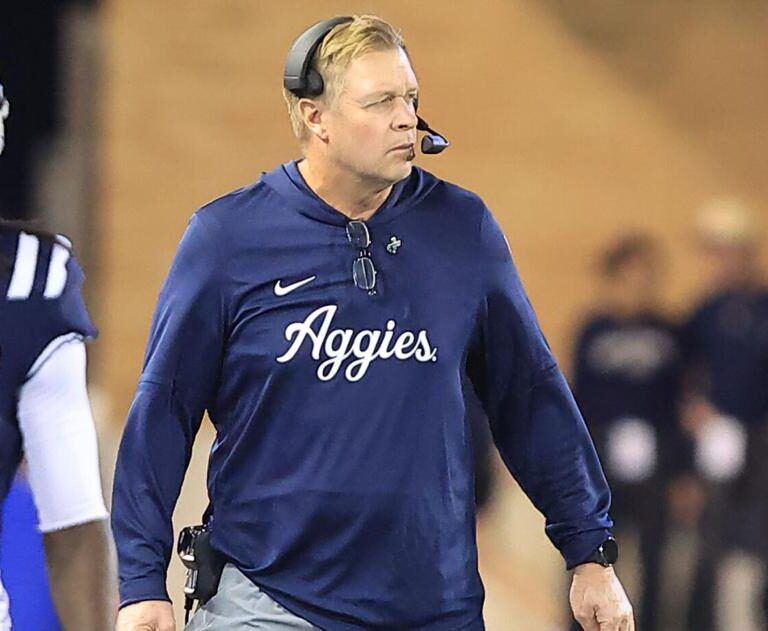
Football head coach Bronco Mendenhall has an almost humorous relationship with the Mountain West. This is the second time he’s been the head coach of a team that left the conference, the first time being when BYU left the league to go independent in 2011.
“I don’t think I’m their favorite currently,” Mendenhall said. “In my interactions at a few of the events, it’s just like it wasn’t just cordial and warm. It seems a little frosty.”
But, in his unique level of experience in leaving the Mountain West, Mendenhall has seen what upward mobility in conference affiliation can do for a program.
“When I was at Brigham Young University, I remember as the league started there, we had won the league twice. Utah had won it twice, and TCU won it twice,” Mendenhall said. “And I remember after that span, both of those schools end up leaving, and BYU chose to go independent. And really, unique opportunities that come with change, and growth opportunities that come with change, and learning that comes with change. And so for Utah State, that’ll all happen as well. There’ll be growth. There’ll be learning, and there’ll be opportunity. And that’s really the leaders and the programs that can adjust and adapt to all that, the fastest, and the most precisely, and the most effectively end up moving toward the top of whatever new organization or league that is. And every school in the Pac-12 will be looking to do just that.”
On the opposite side of the spectrum, there are coaches like Ben Jacobson and Kristen Zaleski. Both were hired by USU mere weeks before the change in conference. Their only perspective on the Aggies’ conference affiliation is being in the Pac-12. With that already in place, the bar simply starts higher for both, rather than trying to ramp up from the Mountain West to the Pac-12.
In other words, they haven’t really had time to digest the full significance of the Aggies moving to the Pac-12 with the mountain of tasks the change of scenery brings with it.
“When we got the job three months ago, it was immediately about the roster and starting a course with the guys that were here and then putting that roster together,” Jacobson said.
Zaleski hadn’t even been in Cache Valley for 48 hours when she arrived at the celebration. Her conversations with Aggie coaching peers on the Quad began with a handshake and introduction.
“I flew in Monday. I’m here a few days and then back out recruiting and make the official move [at the] end of July, early August,” Zaleski said.
Utah State closed out its Mountain West tenure with a historic nine conference championship trophies across five sports. Many more were won in the dozen seasons prior. But all of that success in the Mountain West is now in the past, relegated to a growing trophy case. Future success will require meeting the new standards being set in the Pac-12.